
PAC-MAN 256 - Endless Maze
BANDAI NAMCO Entertainment EuropeArcade
4.228.57K Reviews
- Version
- 2.1.6
- Installs
- 10.00M
- Age Rating
- Everyone
Screenshots
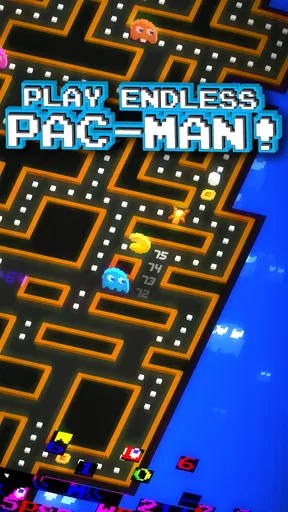
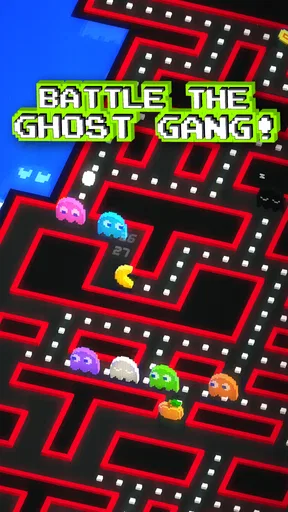
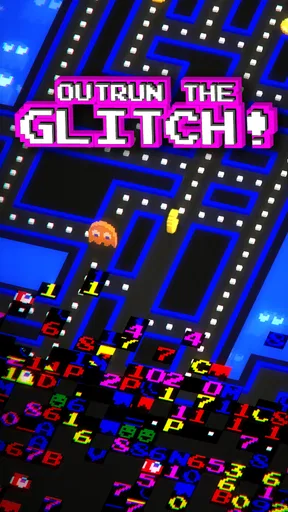
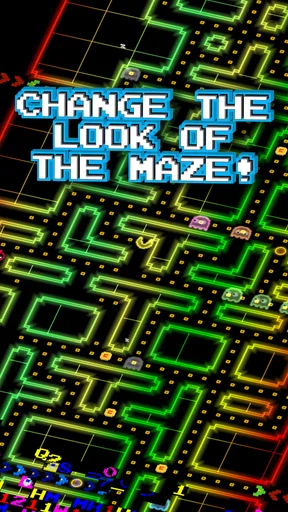
Our Review of PAC-MAN 256 - Endless Maze
 Analysis by Appyee
I came back to PAC-MAN 256 - Endless Maze expecting a quick nostalgia trip, but its real appeal is more practical: it turns the familiar PAC-MAN chase into a compact arcade routine that fits around ordinary gaps in the day. I can play a short run while waiting for a bus, take another attempt after finishing a task, and stop without feeling that I have abandoned a long story or complicated campaign. That simplicity is the reason it is easy to recommend, although it is also the reason some players may eventually want something deeper.
This is a free arcade game from BANDAI NAMCO Entertainment Europe, available for Everyone and supported by optional in-app purchases ranging from $0.99 to $4.99 per item. It has built a sizeable audience, with over ten million installs, an average rating of 4.2 from around 475,000 ratings, and roughly 28,000 written reviews. Those figures suggest that the basic idea travels well across phones, but they do not answer the important question: does it remain worth opening after the first burst of curiosity?
Why the first week feels so satisfying
The opening experience is immediately readable. You guide PAC-MAN through a maze, collect what you can, avoid danger, and try to keep the run alive as the challenge pushes forward. There is no long tutorial demanding patience before the actual game begins. I appreciate that because arcade games work best when the first meaningful decision arrives almost at once.
The endless structure changes the mood of the classic formula. In a traditional PAC-MAN board, clearing the maze gives you a clear sense of completion. Here, the goal is survival and score improvement rather than finishing a fixed set of corridors. That creates a useful tension: every extra moment feels valuable, but a mistake does not erase a long narrative investment. I can lose, understand what went wrong, and try again without needing to remember a plot or rebuild a character.
During my first sessions, the strongest hook was learning the rhythm of movement. The maze is not just a place to collect dots; it is a space where a safe route can become dangerous very quickly. I found myself making small decisions earlier than expected, especially when deciding whether to chase a tempting target or preserve an escape route. That gives the game more thought than its one-thumb presentation initially suggests.
The controls are best approached with deliberate movements rather than frantic swipes. A useful habit is to look one turn ahead before committing to a corridor. If I react only to what is directly in front of PAC-MAN, I often trap myself. When I pause mentally at intersections and identify a fallback direction, runs become more consistent. This is one of the first non-obvious lessons: better play comes less from moving faster and more from planning a safe exit.
The presentation also helps the first-week appeal. The familiar character and maze language make the game approachable even for someone who has not played an arcade title recently. At the same time, the endless format prevents the experience from feeling like a museum piece. It is not simply asking me to repeat an old board; it uses the recognizable idea as a compact survival challenge.
For a parent looking for a straightforward game suitable for a broad age range, the Everyone rating is reassuring. For an adult player, the same accessibility makes it a convenient time-filler rather than a commitment. I would especially suggest trying it when you want something more interactive than scrolling but do not want a game that demands sound, a long uninterrupted session, or a complicated setup.
The small decisions that improve a run
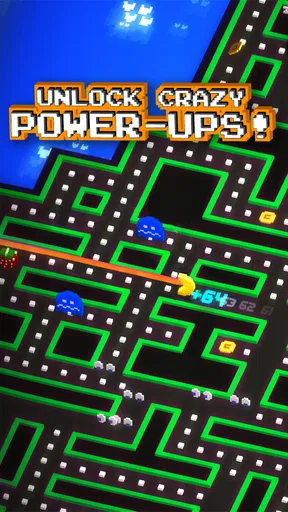
One practical approach is to treat power-ups and opportunities as tools for controlling space, not merely rewards to grab immediately. When the maze becomes crowded, the best choice may be the option that opens a route rather than the one that produces the biggest instant gain. I found that this mindset makes the game feel more tactical and reduces the number of losses caused by chasing every available item.
Another useful habit is to notice why a run ended instead of judging it only by its score. Was the problem an overly ambitious turn, a missed escape path, or a decision made while focused on collecting? Keeping that question in mind turns short attempts into practice. The game does not need a long progression system to teach improvement; the player can create a personal feedback loop by changing one decision on the next run.
This is also where the game differs from many casual alternatives. A simple match-three title may offer a calmer pace and clearer level goals, while an endless runner usually emphasizes automatic forward motion and rapid reactions. This maze gives me more responsibility over route choice. It is a better fit when I enjoy reading a small space and making quick positional decisions, but it is less suitable if I want relaxed puzzle solving or a story-driven reward structure.
What remains after the novelty fades
After the first week, the question changes from “Is this fun?” to “What brings me back?” The answer is mainly the short-run loop. Because each attempt is self-contained, I can return without needing to remember a complicated build or recover from a previous mistake. That makes the game unusually good for irregular play. I can ignore it for several days and still understand what to do within seconds.
The lasting value depends on whether improving personal performance is enough motivation. Players who enjoy chasing a better run, refining routes, and testing their reactions may find a dependable arcade habit here. The game is particularly effective as a five-minute reset between larger tasks. I can use one attempt as a mental break, then stop before it turns into a major distraction.
However, the same independence from long-term progression can limit its staying power. There is no story to uncover, world to explore, or large collection of characters to manage in the way a role-playing game might offer. If your preferred reason to return is unlocking a new chapter or building a persistent team, this endless maze may feel thin once the basic surprise disappears.
I think the best long-term users will set their own goals. One week I might focus on surviving longer; another time I might try to make safer decisions around crowded sections. Without a personal target, repeated runs can blur together. With one, the game becomes a small skill-training exercise rather than a sequence of interchangeable attempts.
That distinction matters when comparing it with other arcade games. A score-attack title with several modes may provide more variety, while a classic fixed-board game can offer a stronger feeling of completion. This one wins on immediacy and convenience. It loses when the player needs a clearly expanding experience. I would keep it installed alongside a deeper game, not necessarily instead of one.
Who is likely to keep playing?
I see three especially good audiences. The first is the returning arcade fan who wants familiar iconography with a modern endless-session structure. The second is the casual player who needs something that can be opened and understood quickly. The third is the competitive-minded player who enjoys turning small route improvements into better results, even without a large multiplayer framework.
It is less convincing for someone who dislikes repetition, becomes frustrated by score-based loops, or needs constant new content to stay interested. It is also not my first choice when I want a slow, relaxing game. The maze can be visually simple while still creating pressure, and repeated failure may feel irritating if I am tired or looking for a low-stakes distraction.
For a realistic everyday example, imagine having ten minutes before an appointment. A narrative adventure may be awkward because stopping halfway through a scene can break concentration. A competitive online match may be risky because the session length is uncertain. This game fits that gap better: I can make a run, stop after a loss, and return to real life without managing unfinished objectives. That convenience is a genuine long-term strength, not just a launch-day novelty.
Maintenance, purchases, and everyday friction
The current version is 2.1.6, and the game supports Android 7.0 or later. That gives it a relatively broad reach for people using older compatible devices, though actual comfort will still depend on the phone and the player’s tolerance for small-screen controls. I would check the store compatibility before installing on an especially old handset, then spend a few minutes adjusting how I hold the phone so turns feel precise.
Because the game is free to start, it is easy to test without making a financial commitment. Optional purchases sit between $0.99 and $4.99 per item, so I would treat them as convenience choices rather than part of the basic decision to try the game. My advice is simple: play enough free sessions to decide whether the core maze loop genuinely holds your attention before spending anything.
The main maintenance burden is not complicated account management or a large collection to organize; it is managing your own attention. Short arcade games can quietly encourage “one more attempt,” especially after a run ends just as you feel you were improving. I find it helps to decide in advance whether I have time for one run or several. That small boundary keeps the game useful as a break instead of allowing it to consume the break.
Another friction point is repetition. The endless format is convenient, but it also means the emotional shape of a session remains familiar: start, navigate, make a mistake, and try again. Players who enjoy mastery will see that repetition as practice. Players who expect constant surprise may see it as a limitation. Neither reaction is wrong; it depends on whether the process itself is rewarding.
I would also avoid judging the game solely by the first few minutes. Early familiarity can make the experience seem almost too basic, while later attempts reveal that route awareness matters. On the other hand, do not assume that patience will unlock a completely different genre. The foundation remains an arcade maze, and no amount of practice turns it into a story adventure or a substantial strategy game.
Where fatigue starts to appear
My biggest concern over the long term is the narrowness of the central loop. The game has a strong identity, but that identity leaves limited room for players who need frequent structural change. Once I understand the basic rhythm, the challenge becomes refinement rather than discovery. That is satisfying in small doses and potentially monotonous in long sessions.
There is also a psychological trade-off in endless play. A fixed board lets me say, “I finished it.” An endless maze replaces that satisfaction with a personal best or a cleaner attempt. If I am not naturally motivated by improvement, the absence of a final destination can make the experience feel directionless.
The game can become tiring when I play it for too long without a specific purpose. My attention drops, I take a risky turn, and the resulting loss feels less like a meaningful challenge than a sign that I should have stopped earlier. In that situation, another genre would serve me better: a short puzzle with a definite solution, a calm simulation, or a game built around exploration rather than repeated survival.
Still, fatigue is easier to control here than in many larger mobile games. There is no need to maintain a daily routine for the game to remain understandable, and a missed week does not appear to punish the player’s return. That makes it a healthier occasional habit for me than games that rely heavily on constant check-ins. Its recurring value comes from accessibility and skill practice, not from making itself difficult to leave.
My long-term verdict
PAC-MAN 256 earns lasting space when you value quick sessions, route-reading, and gradual arcade improvement more than a stream of new content. I would keep it installed for those moments when I want an immediate challenge with a familiar foundation. It is polished enough as a concept to survive the first-week novelty, but it asks the player to supply the long-term goals.
The free entry point makes that judgment easy. Try it without treating the optional purchases as necessary, play in short sessions, and pay attention to whether you enjoy improving decisions rather than merely collecting points. If you find yourself thinking about safer exits, better timing, and how to handle the next maze section, the game has probably found its audience in you.
If you need a campaign, a large progression system, or constant mechanical variety, I would choose another arcade or casual game instead. This is not a replacement for every kind of mobile entertainment. Its strength is narrower and more useful: it gives me a compact, recognizable challenge that can become a reliable habit without demanding much maintenance.
Released on Aug 18, 2015, it has had time to prove that the central idea is more than a launch gimmick. The 4.2 average and broad install base reflect that enduring accessibility, while the limitations are equally clear once the initial excitement settles. My recommendation is positive but specific: install it if you want an endless maze for brief, repeatable skill sessions; skip it if repetition without a final endpoint is likely to feel like work.
Privacy and Permissions
See what permissions an app requests and how it handles your data.
- Wi-Fi connection information
- view Wi-Fi connections
- Other
- view network connections, full network access, control vibration, prevent device from sleeping, Google Play license check
Verdict
Strengths of PAC-MAN 256 - Endless Maze
- Classic PAC-MAN gameplay adapted well for mobile screens.
- Short runs make it easy to play during quick breaks.
- Power-ups add variety and help counter difficult ghost patterns.
- Simple controls are responsive and easy for beginners to learn.
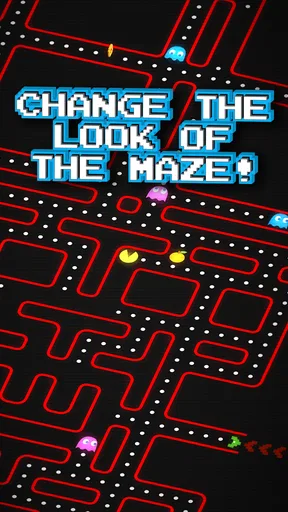
- Retro visuals and sound effects create a nostalgic arcade atmosphere.
Limitations of PAC-MAN 256 - Endless Maze
- Frequent runs can feel repetitive after extended play sessions.
- Some power-ups and upgrades may require significant grinding.
- Ads can interrupt the experience unless removed through an in-app purchase.
- The maze’s endless format offers limited story or long-term progression.
- Later sections can become challenging enough to feel frustrating without upgrades.
Other Releases by BANDAI NAMCO Entertainment Europe
View All
Very Little Nightmares
Adventure4.4
Similar Picks in This Category
View All
Subway Surfers
SYBO Games4.6

Stickman Party 234 MiniGames
PlayMax Game Studio4.6

Subway Princess Runner
Ivy4.4

Temple Run
Imangi Studios4.2

Zombie Tsunami
Mobigame SAS4.6

Stack Ball - Crash Platforms
CASUAL AZUR GAMES4.5
Frequently Asked Questions
What is PAC-MAN 256 - Endless Maze?
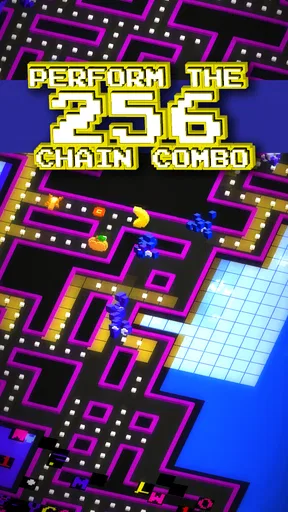
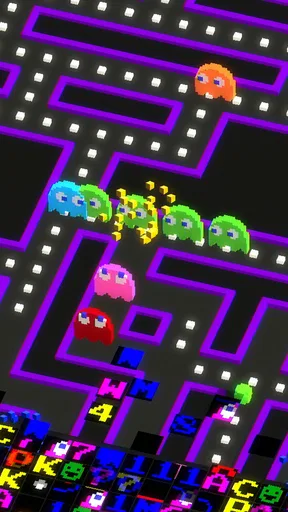
PAC-MAN 256 - Endless Maze is an arcade game that reimagines the classic PAC-MAN formula as an endless maze. You guide PAC-MAN through a continuously scrolling level, eat pellets, avoid ghosts, collect power-ups, and try to reach the highest score possible. The game combines familiar retro gameplay with modern effects, challenges, and a distinctive glitch that constantly moves up the maze.
How do you play PAC-MAN 256 - Endless Maze?
The controls are simple and designed for touchscreens: swipe in the direction you want PAC-MAN to move. Your main objective is to keep advancing while eating pellets and avoiding the ghosts. Power-ups can temporarily give you useful abilities, such as freezing enemies or becoming stronger. Planning your route is important because the maze scrolls upward and hesitation can quickly leave you trapped by the approaching glitch.
Does PAC-MAN 256 - Endless Maze require an internet connection?
PAC-MAN 256 - Endless Maze can generally be played without a constant internet connection, making it suitable for short sessions while traveling or when mobile data is unavailable. However, some features may depend on connectivity, including advertising, purchases, cloud-related services, or certain updates. For the most reliable experience, it is recommended to open the game online occasionally and keep it updated through the official app store.
Is PAC-MAN 256 - Endless Maze free to download?
The game is available as a free download, allowing you to try its core arcade experience without paying upfront. Depending on the version and platform, it may include advertisements and optional in-app purchases, such as upgrades or other convenience features. These purchases are not required to understand the gameplay, but users should review device settings and store controls if they want to prevent accidental spending.
Is PAC-MAN 256 - Endless Maze suitable for children and casual players?
PAC-MAN 256 - Endless Maze is easy to start because its swipe controls and basic objective can be understood quickly. It is appropriate for many children and casual players, although the increasing speed and ghost patterns can become challenging. Parents should check the game’s store rating, advertising content, and in-app purchase options before allowing younger players to use it unsupervised.
Play our best games!


